Free factory layout design with every equipment order Get Free Layout →
Home / Beverage Lines / Carbonated Beverage
Turnkey Line Solution · Carbonated Beverage

Carbonated Beverage Production Lines

Counter-pressure filling for cola, flavored soda, energy and sports drinks and tonic water — in PET bottles, glass bottles and cans, with the carbonator and warming tunnel around them.

Filling principle

Counter-pressure

isobaric filling

Fill temperature

3–5 °C

improves CO₂ solubility

Containers

PET · glass · can

Line extras

Carbonator

and warming tunnel

✓ Free plant layout ✓ Workshop test run ✓ Installation & training
Principle & Structure

How a Carbonated Beverage Line Works

Carbonated beverages include cola, fruit-flavored drinks, energy and sports drinks and tonic water. The filling machine fills them into bottles or cans by counter-pressure filling.

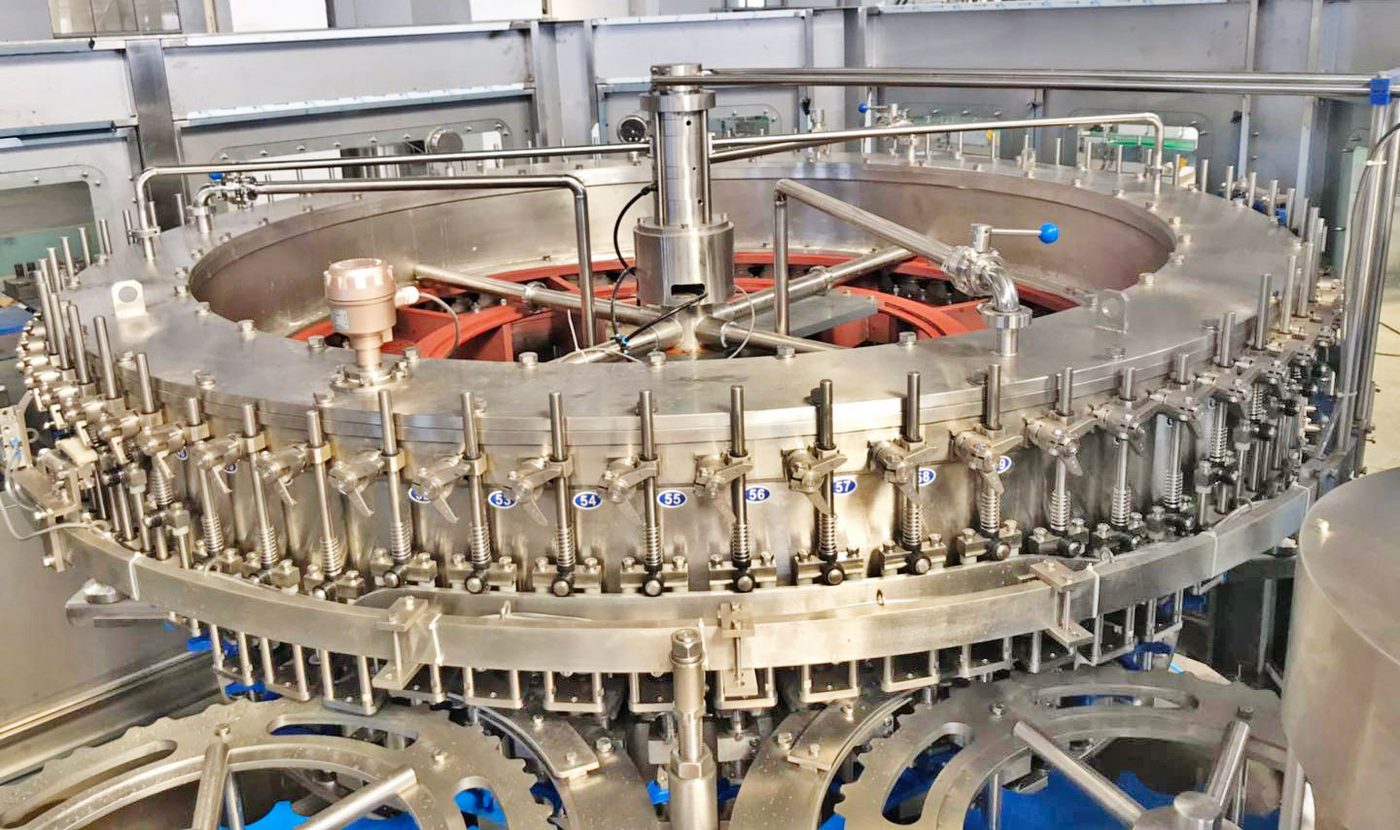
Filling principle. The pressure in the filling tank is higher than atmospheric pressure. CO₂ is fed into each bottle until its pressure equals the tank pressure, and then the drink flows into the bottle by gravity.

Foam control. Foaming comes mainly from filling-valve quality, a high syrup ratio and a warm drink. The liquid runs down the bottle wall through a diverter umbrella, and at the end of filling the CO₂ in the bottleneck is released slowly to relieve the pressure.

Discuss your project →
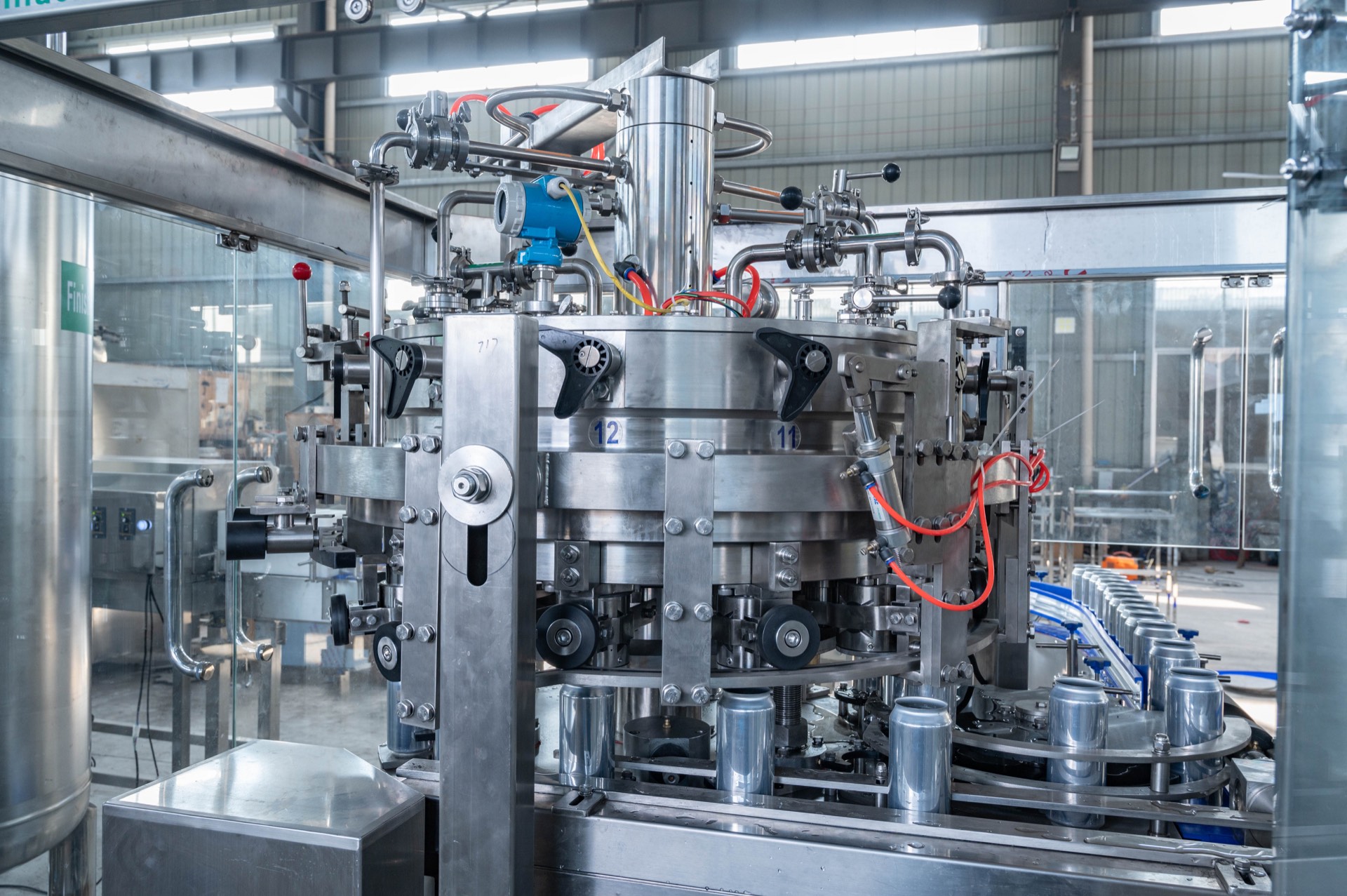
carbonated beverage filling machine built by Linho
📷 Linho carbonated beverage filling machine
Process Flow

From Water Treatment to Palletized Cases

Each station is synchronized by a central PLC. Your line may add or skip stations, depending on your drink, container and output.

  1. 1

    Water treatment

    Clean, treated water is the base of every soda. Softening or RO is sized to your raw water.

    Read the water treatment guide →
  2. 2

    Syrup preparation & mixing

    Water, sugar or other sweeteners, flavor elements, colorings and preservatives are dosed and mixed according to your recipe.

  3. 3

    Cooling & carbonation

    The mixture (around 60 °C at mixing) is cooled by a plate heat exchanger to below 4 °C and then mixed with CO₂ in the carbonator.

  4. 4

    Counter-pressure filling

    Rinse, fill and cap under counter-pressure. For cans: depalletizer, can rinser, then a filling and seaming machine.

  5. 5

    Warming tunnel

    Drinks leave the filler at about 5 °C. Warm water sprays bring them gradually to room temperature, so no condensation forms before labeling and packing.

  6. 6

    Labeling & coding

    Shrink or OPP labels for plastic, self-adhesive or printed labels for glass; ink-jet or laser date printers (fiber laser for cans).

  7. 7

    Packing & palletizing

    Shrink film or cartons, a grab-type cartoner for glass, and a case palletizer.

  8. Your line may look different

    Tell us your drink, container and output — we confirm the flow and the machines for your project.

    Get a Line Proposal →
Equipment List

Equipment in a Carbonated Beverage Line

Every machine is built in our own workshop. You choose the stations you need — we quote a complete equipment list for your project.

Softening or RO, sized to your raw water.

Mixes water, syrup and CO₂ in proportion after cooling.

Makes bottles from preforms. Skip it if you buy ready-made bottles.

Counter-pressure rinse-fill-cap monoblock for plastic bottles.

Counter-pressure filling with bottom-support bottle handling and crown or aluminum caps.

Counter-pressure filling and seaming for aluminum cans.

Takes empty cans off the pallet onto the line.

Brings cold drinks to room temperature before labeling.

Label and code plastic, glass or metal containers.

Shrink-film packer, carton packer or grab-type cartoner.

Automatic stacking of finished cases onto pallets.

Not sure which machines you need?

Send us your product and target output — we quote the complete equipment list.

Get a Line Proposal →
Selection Guide

One-Time Filling or Double Filling?

Soda can be produced in two ways. Your formula decides which one fits.

How it worksOne-time fillingSyrup and carbonated water are mixed in proportion first, then the finished mixture is filled in one go.Double fillingSyrup is filled into the bottle first, then carbonated water is filled on top.
Two ways to mixOne-time fillingBatch: mix syrup and water in a tank, cool it, then carbonate. Continuous: syrup and water flow into the carbonator and are proportioned by a valve, chilled and mixed with CO₂ — stable ratio, high accuracy and little foaming.Double filling—
Best forOne-time fillingMost carbonated drinks — now the mainstream method.Double fillingSoda containing pulp: pulp tends to jam the carbonator nozzle, and is hard to clean.
Watch out forOne-time fillingWith the batch method, the mixed drink must be chilled, carbonated and filled promptly to prevent bacterial growth.Double fillingAn older method: syrup and carbonated water are often at different temperatures, and filling can stir up a lot of foam.

Not sure which option fits? Send us your project details and our engineers recommend the configuration.

Matching Machines

Linho Machine Series for This Line

Bottle lines for soda are configured to your project — tell us the drink, container and output and we propose the machines. Soda in aluminum cans is covered by the Can series.

Know More

Carbonated Beverage FAQs

Straight answers to the questions buyers ask most before ordering. More in our general FAQ.

What containers can this filling machine handle?
PET bottles, glass bottles, PET cans and aluminum cans. Each container type needs its own machine configuration, so tell us the material, size and cap type.
How do I avoid foaming when filling carbonated drinks?
Foaming is mainly caused by filling-valve quality, a high syrup ratio and a warm drink. The liquid flows down the bottle wall through a diverter umbrella, and the vent cam releases the CO₂ in the neck slowly at the end of filling. Filling at 3–5 °C also helps a lot.
Why fill at 3–5 °C, and how is the drink cooled?
Low temperature improves the solubility of CO₂. The water–syrup mixture is around 60 °C when mixed, so a plate heat exchanger with a refrigeration unit cools it to below 4 °C before carbonation.
How is the syrup mixed?
Either in one step (syrup and water mixed in proportion, then carbonated and filled) or in two (syrup first, then carbonated water). One-time filling is now mainstream; double filling suits soda with pulp. See the comparison above.
What is the warming tunnel after the filler for?
The filled drink is around 5 °C while the room is around 25 °C, so the bottles would sweat and disturb labeling, coding and packing. The warming tunnel sprays water at increasing temperatures to bring them gradually to room temperature; a blow dryer then dries the bottles.

Browse all frequently asked questions →

Free Line Proposal

Get a Carbonated Beverage Line Proposal

Tell us your product, container and target output. Our engineers reply within 1 working day with a preliminary line proposal and equipment list.

What to send us

1

Your product

Beverage type and recipe. For water lines, your raw water source too.

2

Target output

Bottles or cans per hour, and how many shifts you plan to run.

3

Container samples

At least one bottle, cap and label (or can and lid). We build the machine to the samples.

4

Workshop & utilities

Workshop size, plus your voltage, frequency and number of phases, water and compressed air.


    🔒 Direct response from our engineers within 1 working day. Free plant layout drawing once the equipment is confirmed.

    Prefer to chat? WhatsApp us or write to info@linhomachine.com.