Hot filling or aseptic cold filling — complete lines for juice, tea, ready-to-drink coffee and functional drinks in PET bottles, glass bottles and cans.
Filling principle
Vacuum filling
negative pressure
Filling process
Hot or aseptic
cold filling
Containers
PET · glass · can
Pulp & granules
3-in-1 / 4-in-1
units available
A juice filling machine fills fruit juice and tea into bottles or cans, usually by hot filling. The same line type handles other non-carbonated soft drinks: ready-to-drink tea and coffee, functional drinks (sports, nutritional, value-added or flavored water) and non-alcoholic beer.
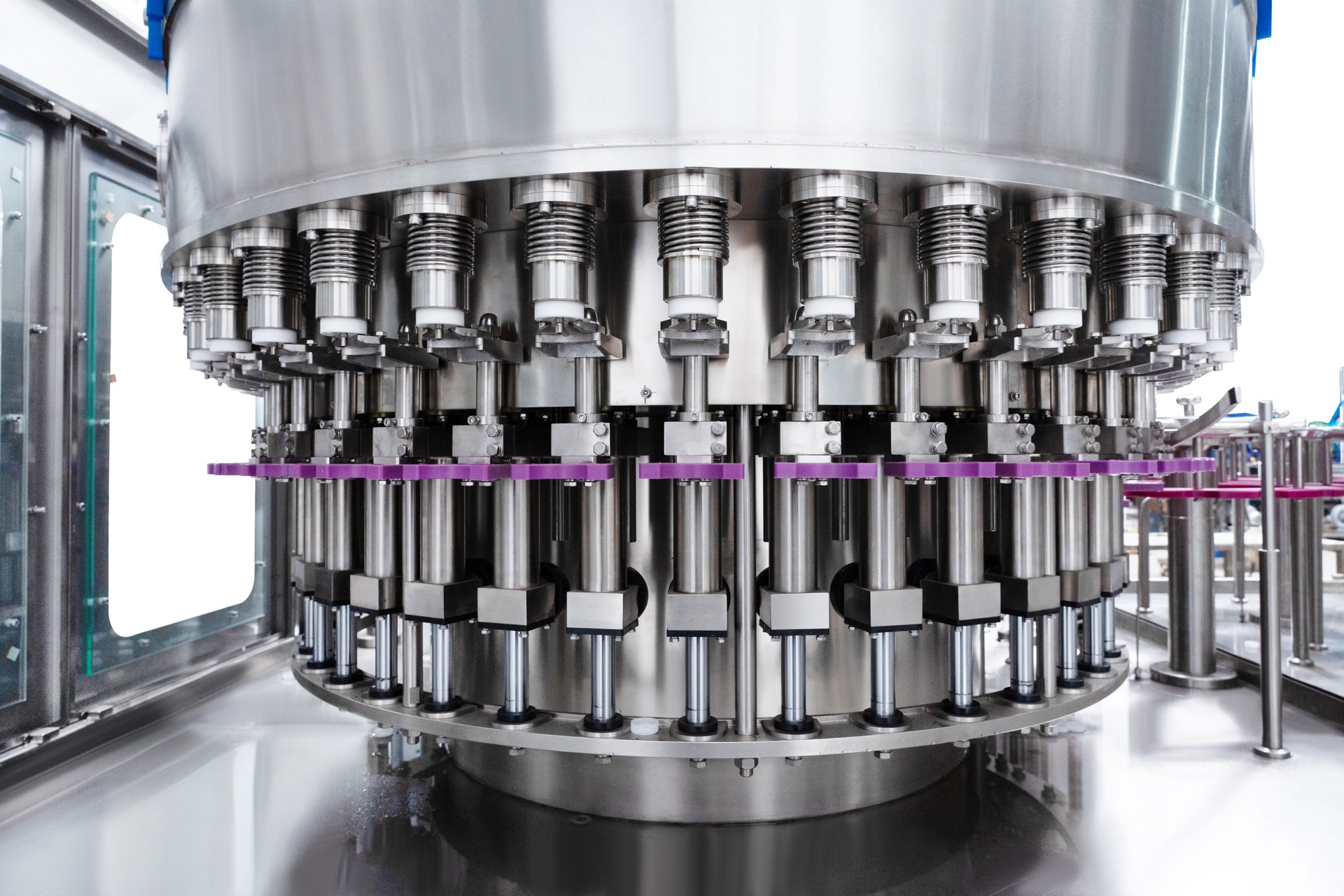
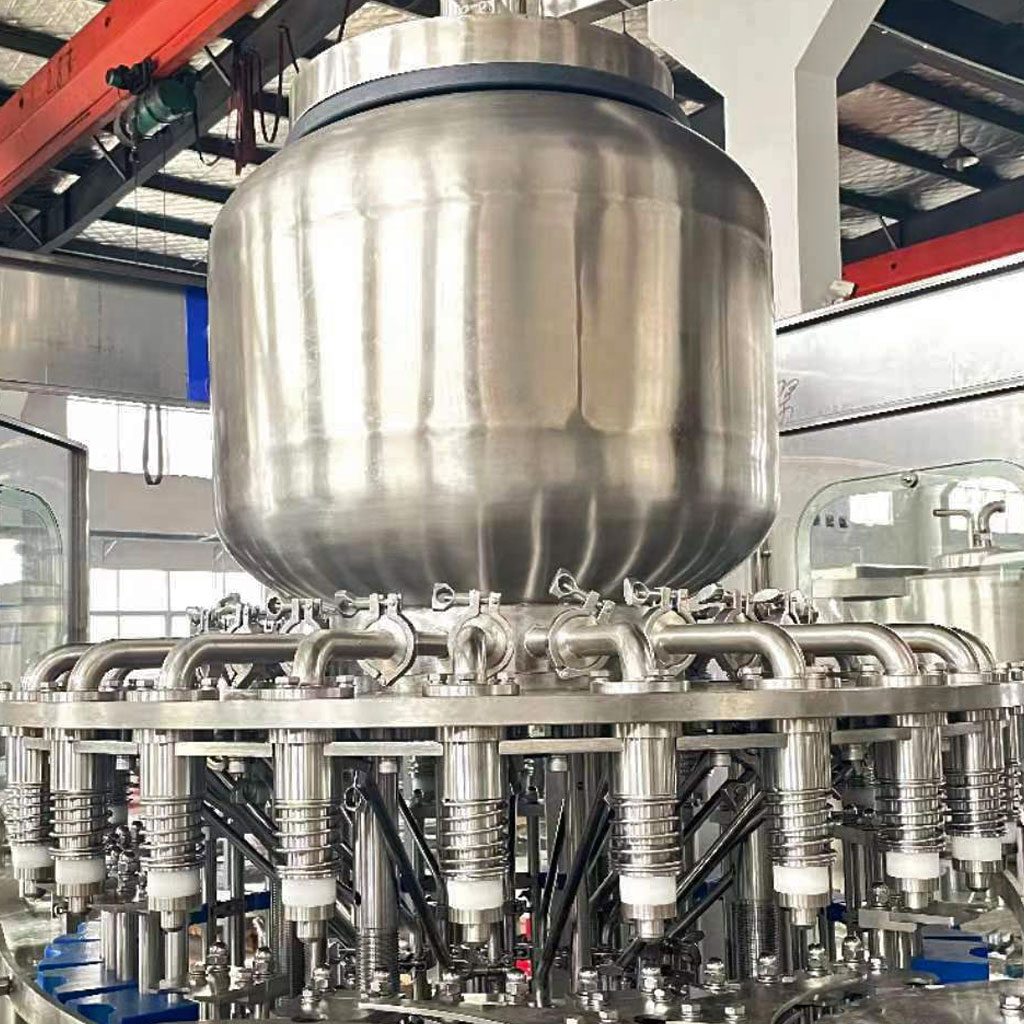
Filling principle. Vacuum (negative-pressure) filling: with the tank at normal pressure, a vacuum reflux system pumps the air out of the bottle. When the vacuum reaches a set level, the liquid flows in, and filling stops when the level reaches the suction pipe.
Pulp and jam. Fruit granules smaller than 3 mm can be filled together with the juice on a standard 3-in-1 unit. Larger granules need a 4-in-1 unit that fills granules and juice separately. Jam is very thick, so jam machines use position-type filling instead.
Discuss your project →
Each station is synchronized by a central PLC. Your line may add or skip stations, depending on your drink, container and output.
From fresh fruit: washing, crushing, juicing, filtering, homogenizing, degassing, concentrating and sterilizing. From concentrate: sugar melting, syrup filtering, mixing tank, double filtration, homogenizing, degassing and sterilizing.
Blow-mold PET preforms or buy ready-made bottles. Glass bottles and metal cans are used by premium juice brands.
Rinse, fill under vacuum and cap. Choose hot filling (sterilized by UHT, filled hot and sealed hot) or aseptic cold filling.
Hot-fill lines only: after capping, bottles tilt so the product's own heat sterilizes the bottle mouth and the inside of the cap — with no extra heat source.
Hot-fill lines only: preheating, sterilization and cooling zones bring the products down to room temperature. Aseptic cold filling needs neither step.
Shrink or OPP labels for plastic, self-adhesive or printed labels for glass; ink-jet or laser date printers.
Shrink film or cartons, a grab-type cartoner for glass, and a case palletizer.
Your line may look different
Tell us your drink, container and output — we confirm the flow and the machines for your project.
Every machine is built in our own workshop. You choose the stations you need — we quote a complete equipment list for your project.
Pre-treatment for fresh fruit or for concentrate and formulated drinks.
Product and process water, sized to your source.
Makes bottles from preforms. Skip it if you buy ready-made bottles.
For PET or glass bottles, with 3-in-1 or 4-in-1 units for drinks with pulp.
For juice and tea in cans, with an empty-can depalletizer.
Uses the product heat to sterilize the bottle neck and cap (hot filling).
Preheating, sterilizing and cooling zones (hot filling).
Label and code plastic, glass or metal containers.
Shrink-film packer, carton packer or grab-type cartoner.
Automatic stacking of finished cases onto pallets.
Not sure which machines you need?
Send us your product and target output — we quote the complete equipment list.
The filling temperature decides the machines around the filler, the container you can use and the taste of the product.
| Hot filling | Aseptic cold filling | |
|---|---|---|
| How it works | Hot fillingThe juice is sterilized by ultra-high-temperature instant sterilization, filled into a pre-sterilized clean bottle while hot, and sealed while hot. | Aseptic cold fillingThe sterilized product is cooled quickly and filled into pre-sterilized containers in an aseptic state. After sealing, no sterilization or cooling is needed. |
| Best for | Hot fillingHigh-acid juice and tea drinks. | Aseptic cold fillingA wide range of juice products. |
| Advantages | Hot fillingEasy to operate; stable, easy-to-control taste; long shelf life. | Aseptic cold fillingFresh taste and flavor; less loss of heat-sensitive ingredients; lower container cost; no heating odor; long shelf life without preservatives or refrigeration. |
| Trade-offs | Hot fillingLong heating loses heat-sensitive ingredients and tastes blander; the container must resist heat, which raises its cost. | Aseptic cold fillingMore complex to operate; higher equipment cost; strict cleanliness requirements for the filling environment. |
Not sure which option fits? Send us your project details and our engineers recommend the configuration.
Matching Machines
Bottle lines for juice and tea are configured to your project — tell us the drink, container and output and we propose the machines. Juice in aluminum cans is covered by the Can series.
Straight answers to the questions buyers ask most before ordering. More in our general FAQ.
Tell us your product, container and target output. Our engineers reply within 1 working day with a preliminary line proposal and equipment list.
What to send us
Your product
Beverage type and recipe. For water lines, your raw water source too.
Target output
Bottles or cans per hour, and how many shifts you plan to run.
Container samples
At least one bottle, cap and label (or can and lid). We build the machine to the samples.
Workshop & utilities
Workshop size, plus your voltage, frequency and number of phases, water and compressed air.
Prefer to chat? WhatsApp us or write to info@linhomachine.com.