Common beer containers are glass bottles, steel bottles, plastic bottles and cans. This article focuses on cans.
Tin cans and aluminum cans
Tin cans are harder and more resistant to acid and corrosion, so they are used for acidic foods such as juice. Aluminum cans are used more for carbonated drinks such as beer, and they are more environmentally friendly: the recovery rate is up to 90%.
Aluminum cans are made from aluminum coil in seven steps: cup forming, body making, washing, printing, necking, inspection and palletizing. Beverage factories normally buy their cans from can suppliers — even very large brands do not make their own. Filling starts when the empty cans arrive on pallets.
The machines in a canned beer line
- Depalletizer
- Can rinsing machine
- Filling and sealing machine
- Level inspector
- Pasteurizer
- Blow dryer
- Date printer
- Packing machine
1–2. Depalletizer and can rinser
The depalletizer takes the cans off the pallet and puts them on the conveyor. The rinser then cleans every empty can before it enters the filler, washing away any possible impurities.
3. Filling and sealing machine
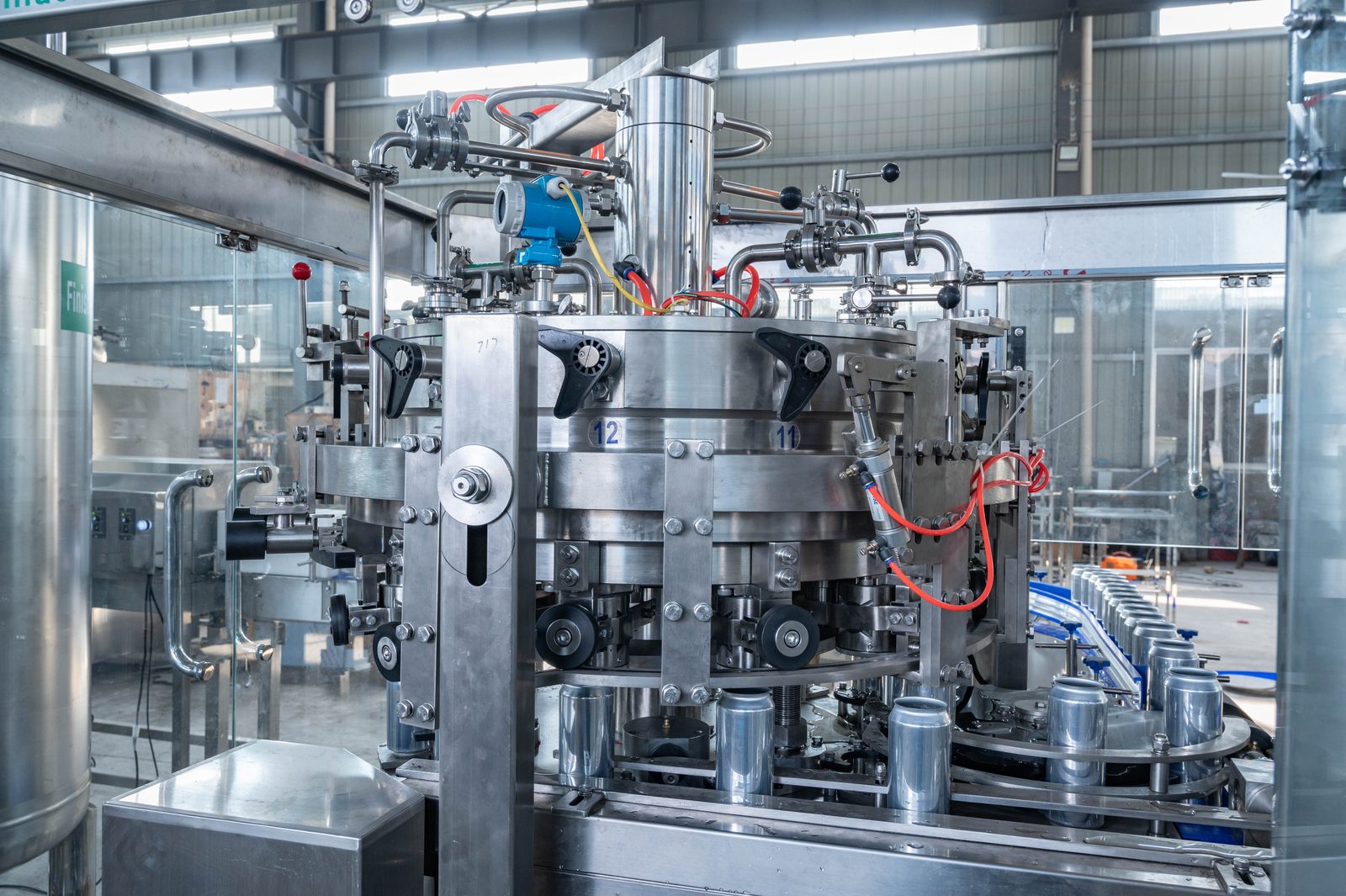
Carbonated drinks such as beer are filled with a counter-pressure filling machine. Two problems have to be solved: air and foam.
- Foam. Rich foam in the filling tank ruins the fill level. Linho uses advanced diaphragm valves so beer enters the tank gently instead of flooding in, and German counter-pressure filling technology avoids excessive foaming and uneven levels.
- Air. Too much oxygen shortens shelf life and changes flavor. A filling-and-sealing 2-in-1 machine keeps the contact time between beer and air short. An adjustable double vacuum removes air from the cans before and during filling, three vents in each filling valve discharge air out of the tank, and two CO₂ routes blow the can mouth between filling and sealing.
- Sealing. A good seam determines the life of a can of beer. Linho uses original imported Italian sealing heads.
- Control. Siemens PLC and touch-screen control, with small components from Schneider, make the machine easy to operate and maintain. An independent control cabinet lets operators work at a safe distance, and the operating pressure of the filler is adjustable and clearly displayed.
Head configurations range from 12 filling heads and 1 sealing head (about 2,000 cans per hour) up to 36 filling heads and 6 sealing heads (about 15,000 cans per hour).
4. Level inspector
Even with precise filling, a level inspector removes any can whose fill level is below standard, because consumers notice — and it affects the brand. Detection uses X-rays; the latest generation no longer uses isotope sources, and it is safe for workers within the normal operating range.
5. Pasteurizer
Beer can be pasteurized before or after filling.
- Before filling (UHT). The beer is held at 72–73 °C for 20–30 seconds. The equipment is compact and affects beer quality least, but filling must then take place in a sterile environment, so a clean workshop is usually required. For draft beer a plate-and-frame filter replaces the UHT unit.
- After filling (spray tunnel). Hot water is sprayed on the cans as they pass through preheating, sterilization and cooling zones. The cans stay in the sterilization zone (60–62 °C) for 18–25 minutes, and the whole process takes about 30 minutes. It uses more time and energy than UHT, but the beer is sterilized in the can at the very end of production, so there is little chance of re-infection.
Small packages such as PET bottles and cans mostly use spray sterilization; large packages such as kegs mostly use UHT.
6. Blow dryer
Cans leaving the spray tunnel are wet and must be dried before coding. Linho uses a spider-foot blow dryer with adjustable blower angles, so the drying angle can follow the can height.
7. Date printer
Date printers are either ink-jet or laser. Ink is cheaper to buy, but the print head needs cleaning to prevent clogging and the printer uses consumables. Lasers use almost no consumables and have few problems, which suits regions where consumables are hard to buy, but they cost more.
8. Packing machine
The common methods are film packing, one-piece carton packing and half-tray packing. Carton and half-tray packers cost more, so a small line or a limited budget can use semi-automatic packing: cans are put on the tray or in the carton by hand and then wrapped by an automatic film packer. A palletizer and pallet wrapper make transport easier and save a lot of labor.