Before a filling machine can be built, two things must be confirmed.
- The power supply. Tell us your factory's industrial voltage, frequency and number of phases. Industrial power in China is 380 V, 50 Hz, three-phase; it varies between countries, so we customize the machine to match yours.
- Packaging samples. Many parts touch the bottle and cap directly — for example the star wheel and bottle holder — and must fit them exactly. We need at least one bottle and one cap as a sample, and the machine is built strictly to it. Changing the sample after it has been confirmed wastes time and money.
Production then runs in three stages: parts processing, assembly and commissioning.
Stage 1 — Parts processing
The base. The base is the most fundamental support of the machine: it carries the washing, filling and capping sections, and only a stable base allows high-speed running for a long time. We treat it in five steps:
- Sand the outer surface of the high-carbon steel base, ready for painting.
- Bore the panels so they are 100% horizontal. Even a slight tilt would tilt the filling tank and capping section and could scrap the whole machine.
- Punch the round holes for the washing, filling and capping sections with laser and standard punching machines, so position, size and finish are accurate.
- Spray multi-layer anti-rust paint (marine paint) — the machine works with large amounts of water and beverage.
- Clad the panel in stainless steel, warping the steel at each hole so water cannot creep into the gap.
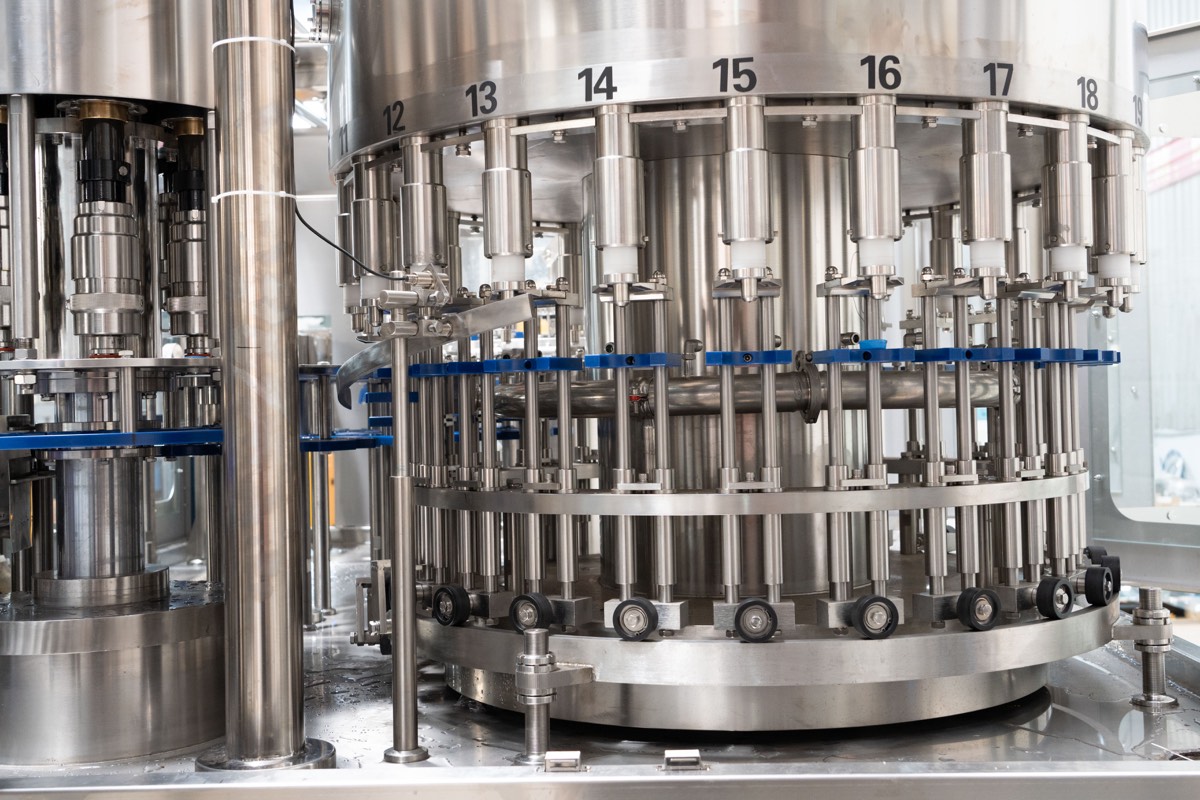
Precision parts. The finer each part is machined, the better the parts fit together, and the smoother, faster and longer the machine runs. We have laser cutting machines, CNC and other equipment, and our experienced machinists make parts such as filling valves and capping heads from the drawings. Compared with outsourcing, in-house machining controls quality better and saves time.
Electrical components. PLCs, touch screens, inverters, sensors, contactors and motors come from well-known brands such as Siemens, Mitsubishi, NSK, Schneider, ABB, Turck and Grundfos. They help the machine run better and make spare parts easy to buy locally.
Stage 2 — Assembly
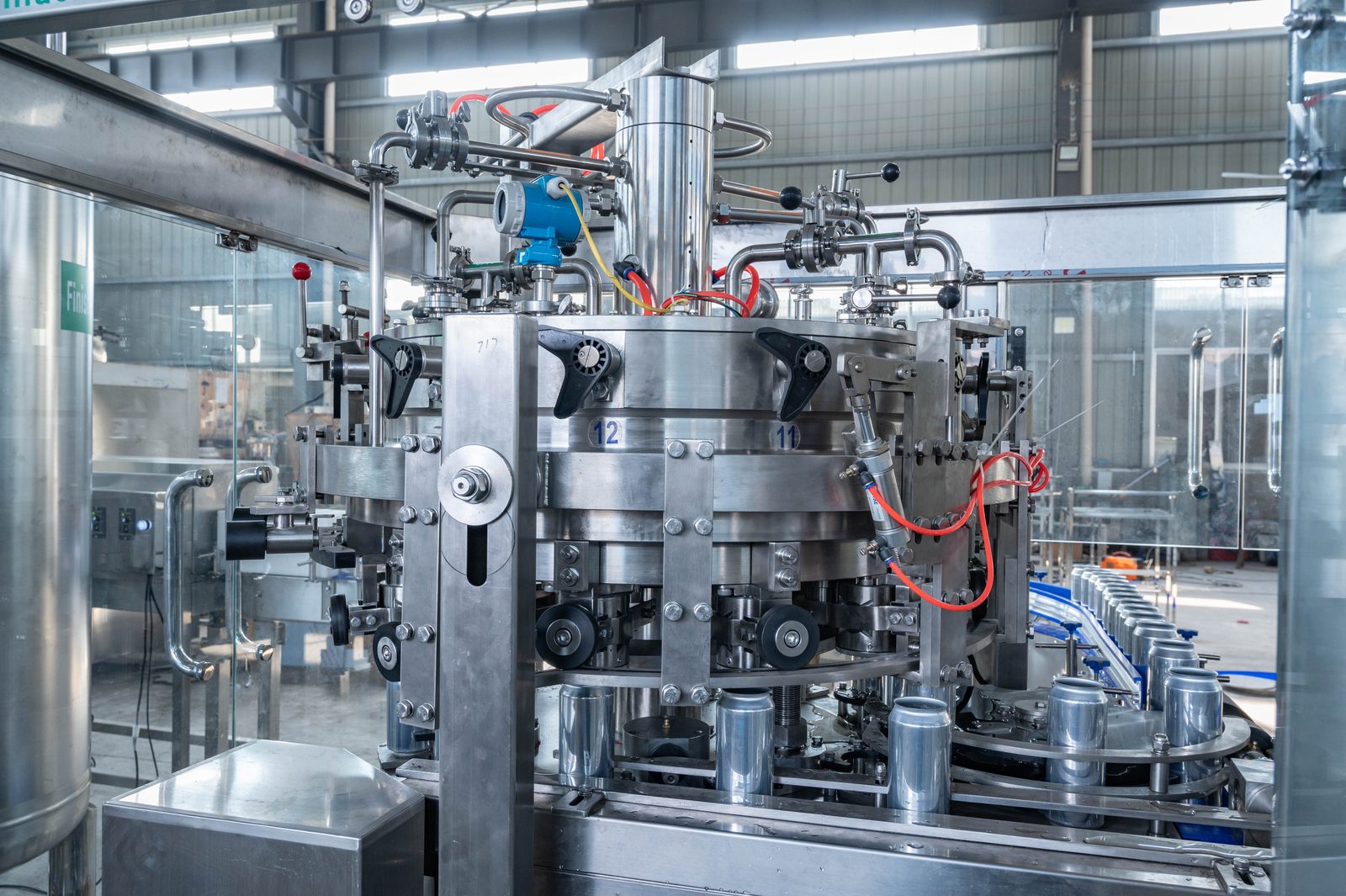
The first job is installing the columns, which are solid stainless steel: when the whole washing, filling or capping section is loaded, the machine is more stable and does not rust. When all parts are assembled, the electricians power up the machine and debugging follows.
Stage 3 — Commissioning
Commissioning has two phases. In the bottleless idle run we check that the machine is well assembled, that all parts run smoothly and that there is no noise. Then comes the real-bottle run, where we watch for bottle jams, whether bottle washing is in place, whether the fill level is accurate and whether the caps are sealed. Linho usually idles a machine for 3 days and then runs it with real bottles for at least one day, so every function is proven before shipment.
After commissioning, the machine is cleaned, its nameplate is attached, and it is packed according to your shipping requirements to wait for shipment.