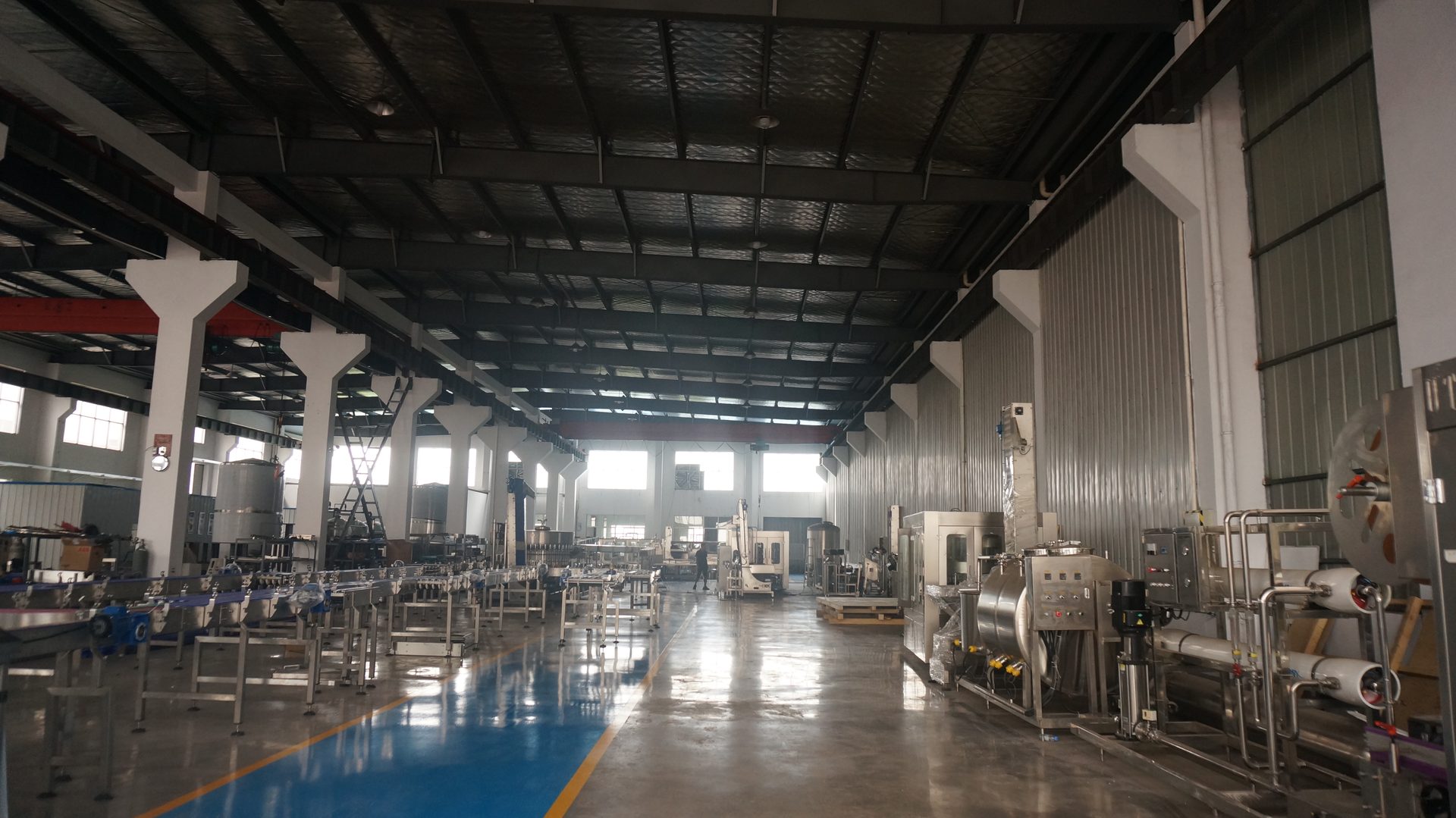
The size of the filling workshop is determined by the scale of the production line. As long as the daily output is met, the larger the workshop, the better — a whole line usually needs 500–1,000 square meters. In practice we draw the plant layout according to your line size, the type of beverage and the size of your workshop, and that layout is free once the equipment is confirmed.
Layout principles
- Water treatment close to the water source. For well water, the deep-well pump fills a reservoir or tank first; the water treatment system draws from it. The tank protects the treatment plant from excessive pump pressure and supplies water continuously. Placing water treatment near the source saves piping and keeps the water cleaner.
- Packing machine exit close to the finished-goods store. Packed beverages should be moved to storage quickly to avoid congestion. Leave enough space at the exit for workers and forklifts.
- Blow molding machine close to the filling machine entrance. If the blow molder is not directly connected to the filler, keep it close so newly blown bottles reach the filler quickly and stay clean.
- Space for lifting conveyors in multi-story workshops. A spiral lifting conveyor moves products smoothly between floors. Put the finished-goods store on the ground floor so trucks can load easily.
- Noisy machines separate from the work area. Put loud equipment such as air compressors in a separate space.
Depending on the standards of your country, a clean workshop may be required. In the food and beverage industry the filling workshop generally uses a 100,000-class purification level.
Raw material storage
- Labels and packaging films. Shrink labels and films: 0–25 °C, away from direct sunlight. Self-adhesive labels: about 23 °C and 55% relative humidity.
- PET preforms and PP caps. A ventilated, cool, dry warehouse without chemicals or toxic substances; below 30 °C and below 70% relative humidity; no more than one year from the manufacturing date.
- Cartons. Keep them away from rain, snow, sun and moisture in a ventilated dry warehouse, at least 100 mm above the floor; store for no more than about half a year.
- Formulation ingredients. Follow the ingredient manufacturer's recommendations. Fruit pulp and concentrate: aseptic products at room temperature away from heat; low-temperature products in cold storage at −18 °C or below. Tea: 0–10 °C, and away from moisture, odors and light. Fructose: relative humidity no more than 70% and not below 0 °C or above 35 °C. White sugar: relative humidity 70% or less, 38 °C or less, stacked separately on wooden pallets away from walls. Flavors and fragrances: cool, dry and clean, 10–30 °C. Enzymes: 25 °C or below.
Finished-goods store
Requirements depend on the product. Chilled products such as yogurt and juice that need a cold chain are stored at 3–5 °C. Hot-filled juice, soda and beer can be kept below 30 °C. Leave enough space at the gate for trucks to load.